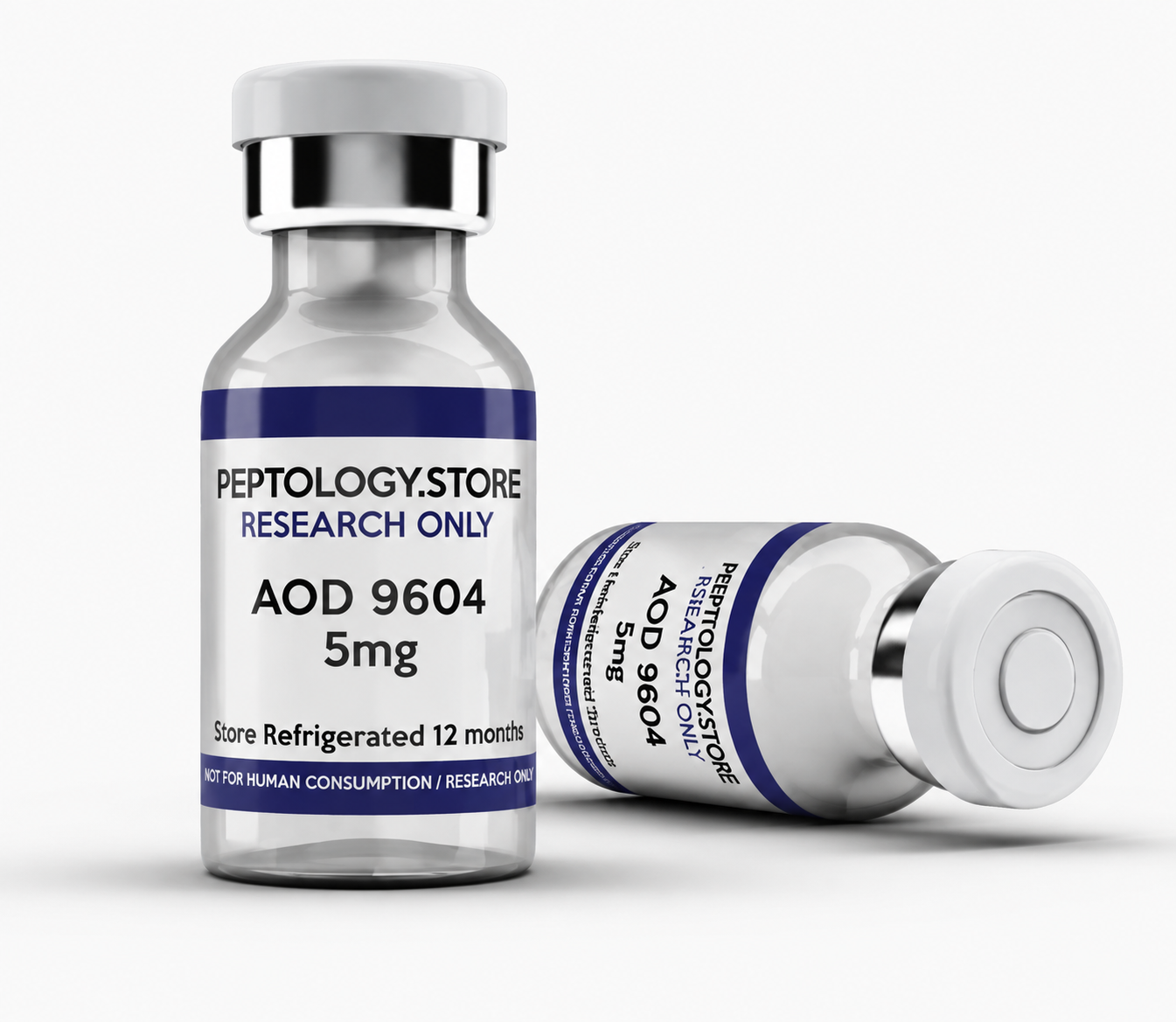
Premium AOD 9604 5mg Research Peptide for Sale | 5mg Lyophilized Powder | Independent Lab Verified | 48-Hour Delivery Across EU & UK
Beyond Hair Peptide: The Advanced Tri-Peptide Blend for Follicle Biology & Scalp Tissue Research
Buy AOD 9604 5mg EU & UK, peptology.store is proud to present AOD 9604 5mg, a premium research-grade tri-peptide synergistic blend manufactured to the highest analytical standards. As a trusted peptide vendor uk and leading EU peptide supplier, we provide researchers across Europe with AOD 9604 5mg Peptide for sale that delivers exceptional purity, consistency, and documented quality for advanced studies in hair follicle biology, dermal papilla cell function, and scalp tissue regeneration. Buy Beyond Hair Peptide EU & UK
AOD 9604 5mg – High-Purity Peptide for Metabolic Studies
AOD 9604 is a peptide derived from Growth Hormone, intended for use in scientific research focusing on metabolic processes.
Solubility note: AOD 9604 shows reduced aqueous solubility in certain batches, consistent with its homology to human growth hormone and the associated pH sensitivity. Laboratory data indicates that a mildly acidic solvent system improves dissolution under controlled conditions. This information is provided for analytical and laboratory reference only.
- Product Name: AOD 9604 5mg
- Catalogue Number: AOD2-025
- Molecular Formula: C78H123N23O23S2
- Molecular Weight: 1815.1 g/mol
- Purity: 99.5%
- Sequence: Tyr-Leu-Arg-Ile-Val-Gln-Cys-Arg-Ser-Val-Glu-Gly-Ser-Cys-Gly-Phe
- Form: Lyophilised Solid
Storage and Handling:
Provided in a lyophilised form, AOD 9604 requires specific handling and storage conditions for optimal stability, as detailed on our website.
Legal and Safety Information:
All UK-Peptides products, including AOD 9604, are sold exclusively for research. Inquiries about human consumption are strictly prohibited, adhering to safety and legal standards.
For researchers seeking to buy peptide online for investigations into follicle biology, dermal papilla cell studies, or scalp tissue regeneration, peptology.store offers this premium research blend with comprehensive documentation, including Certificates of Analysis and batch-specific purity data. Whether your laboratory is based in London, Berlin, Paris, or anywhere in the European Union, our guaranteed 48 hour delivery peptide service ensures your research continues without interruption.
The Scientific Foundation of AOD-9604 Peptide Research
The Metabolic Research Profile of AOD-9604
AOD-9604 represents a synthetic peptide derived from the C-terminal region of human growth hormone and has been investigated primarily for its potential effects on lipid metabolism and adipose tissue biology. Research has examined its influence on lipolysis, fat oxidation, and metabolic signaling while distinguishing these effects from the classical growth-promoting actions associated with full-length growth hormone.
Mechanism of Action: Lipid Metabolism and β3-Adrenergic Signaling
AOD-9604 in Metabolic Research: AOD-9604 has been studied for its potential influence on pathways involved in adipose tissue metabolism. Research indicates that the peptide may increase lipolytic activity and influence β3-adrenergic receptor expression in experimental models.
Lipolysis: AOD-9604 has been investigated for its ability to promote the breakdown of stored triglycerides into fatty acids and glycerol in adipose tissue models.
Fat Oxidation: Research has examined whether AOD-9604 can enhance the utilization of fatty acids as an energy substrate, making it relevant to studies of cellular energy metabolism.
β3-Adrenergic Pathway: Experimental studies have investigated changes in β3-adrenergic receptor expression following exposure to AOD-9604, providing a potential model for examining adrenergic regulation of adipose tissue metabolism.
Key Research Applications
Adipose Tissue Research
AOD-9604 is used in research investigating adipose tissue biology and lipid regulation. Research applications include:
- Lipolysis Studies: Investigating triglyceride breakdown and free-fatty-acid release
- Adipocyte Research: Studying metabolic activity within adipose tissue models
- Lipid Storage: Exploring mechanisms regulating fat accumulation and mobilization
Fat Oxidation Research
AOD-9604 has been investigated in experimental models examining fatty-acid utilization:
- Fatty Acid Oxidation: Studying the conversion of fatty acids into usable cellular energy
- Energy Metabolism: Investigating changes in substrate utilization
- Metabolic Signaling: Exploring pathways involved in the regulation of energy balance
β3-Adrenergic Receptor Research
Research has examined the relationship between AOD-9604 and β3-adrenergic signaling:
- β3-AR Expression: Investigating changes in β3-adrenergic receptor expression
- Lipolytic Signaling: Studying adrenergic regulation of triglyceride breakdown
- Adipose Tissue Signaling: Exploring receptor-mediated metabolic pathways
Obesity and Metabolic Research
AOD-9604 has been investigated in experimental models related to body-weight regulation and metabolic function:
- Body-Weight Models: Studying changes in body-weight development in animal models
- Adiposity Research: Investigating mechanisms associated with fat accumulation
- Metabolic Regulation: Exploring pathways connecting lipid metabolism and energy expenditure
Growth Hormone Fragment Research
AOD-9604 provides a research model for examining metabolic activity associated with the C-terminal region of human growth hormone:
- GH Fragment Biology: Investigating biological activity associated with GH-derived peptide sequences
- Metabolic Effects: Studying metabolic pathways independently of the complete GH molecule
- Receptor Signaling: Exploring differences between GH-fragment activity and full-length growth hormone signaling
Preclinical Safety and Tolerability Research
AOD-9604 has been investigated in preclinical and early-stage research for its tolerability and metabolic effects:
- Glucose Metabolism: Studying glucose-related metabolic parameters
- IGF-1 Research: Investigating whether exposure produces changes associated with conventional GH signaling
- Toxicology Research: Examining tolerability and safety parameters in experimental models
Quality Assurance: Independent Laboratory Verification
Third-Party Testing Confirmation
AOD-9604 research material may be evaluated through independent laboratory analysis to verify composition accuracy and labeling precision. Testing can include confirmation of peptide identity, purity, and batch consistency for research applications.
Manufacturing Excellence
peptology.store sources AOD-9604 with quality-control procedures appropriate for research compounds:
- HPLC Purity Analysis: Purity verification by high-performance liquid chromatography
- Mass Spectrometry Verification: Molecular-weight confirmation via LC-MS or LC-HRMS
- Batch-Specific Certificates of Analysis: Documentation for individual production batches
- Independent Laboratory Testing: Third-party verification where available
- Research-Use Only (RUO) Labeling: Material designated for research and laboratory use only
Chemical and Product Specifications
| Molecular Weight (g/mol) | 1815.08 g/mol |
| Peptide Sequence | Tyr-Leu-Arg-Ile-Val-Gln-Cys-Arg-Ser-Val-Glu-Gly-Ser-Cys-Gly-Phe |
| CAS Number | 221231-10-3 |
| Physical and Chemical Properties | |
| Molecular Formula | C78H123N23O23S2 |
| Appearance | White to off-white lyophilised powder |
| Melting Point | Not applicable (decomposes before melting) |
| Research Use and Safety | |
| Caution | Handle using appropriate PPE and in compliance with relevant laboratory safety standards. |
| Intended Use | For laboratory research use only. Not for human or veterinary use. |
| Hazard Classification | Not classified as hazardous under GHS for research quantities |
| Storage, Handling and Stability | |
| Storage Temperature, Opened | -20 °C, minimise freeze-thaw cycles |
| Storage Temperature, Unopened | -20 °C recommended for long-term storage |
| Shelf Life | 2 years unopened under recommended conditions |
| Reconstitution Stability | Stable for up to 28 days at 2-8 °C in aqueous solution under sterile conditions |
Stability and Handling Guidelines
Lyophilized Powder Storage: Store lyophilized AOD-9604 powder at -20°C in a dry, dark environment, protected from light and moisture . Under proper storage conditions, the powder maintains stability for up to 24 months from the date of manufacture.
Reconstitution Protocol:
- Allow vial and solvent to reach ambient temperature before opening to prevent condensation
- Reconstitute using sterile bacteriostatic water to achieve desired concentration
- Inject solvent slowly down the inside wall of the vial to minimize foaming
- Gently swirl or roll the vial until fully dissolved—do not shake vigorously
- Label the vial with the date of reconstitution
- Refrigerate immediately at 2-8°C
Reconstituted Solution Storage: Store reconstituted AOD-9604 at 2-8°C for short-term use. For longer-term storage, aliquot into single-use portions and store at -20°C. Avoid repeated freeze-thaw cycles.
Protection from Light and Moisture:
- Store in original packaging protected from light
- Keep vials tightly sealed when not in use
- Allow refrigerated vials to reach room temperature before opening to prevent condensation.
Key Benefits
- Premium Quality Manufacturing: GMP-certified production, ≥99% HPLC-verified purity with lot-specific COAs
- Independent Lab Verification: Third-party testing confirms peptide identity and purity
- Well-Characterized Peptide: AOD-9604 has been investigated extensively in metabolic and adipose tissue research
- Lipolysis Research: Investigate triglyceride breakdown in adipose tissue models
- Fat Oxidation Studies: Explore fatty-acid utilization and energy metabolism
- β3-AR Pathway Research: Investigate β3-adrenergic receptor expression and signaling
- Adipose Tissue Research: Study metabolic activity and lipid regulation in adipocytes
- Lipid Metabolism Studies: Investigate mechanisms controlling fat storage and mobilization
- Obesity Research: Explore body-weight and adiposity mechanisms in experimental models
- Metabolic Studies: Investigate energy expenditure and substrate utilization
- Growth Hormone Fragment Research: Study biological activity associated with the C-terminal region of human growth hormone
- Insulin Sensitivity Research: Investigate glucose and insulin-related metabolic parameters
- Energy Expenditure Studies: Explore changes in metabolic energy utilization
- Preclinical Research: Suitable for laboratory investigation of metabolic pathways
- Precise Formulation: Standardized 5 mg format for consistent research applications
- Well-Characterized: Supported by published research investigating lipid metabolism and metabolic signaling
- Comprehensive Documentation: Certificates of Analysis with batch-specific data
- 48-Hour EU & UK Delivery: Rapid shipping to research facilities across Europe
- Batch Consistency: Rigorous quality control ensures lot-to-lot reproducibility
Frequently Asked Questions
Q: What is AOD-9604?
A: AOD-9604 is a synthetic peptide derived from the C-terminal region of human growth hormone. It is designed for laboratory investigation into lipid metabolism, adipose tissue biology, lipolysis, and fat oxidation .
Q: What are the research properties of AOD-9604?
A: AOD-9604 has been investigated for its effects on lipid metabolism, including lipolysis, fat oxidation, adipose tissue signaling, and β3-adrenergic receptor-related pathways.
Q: What purity level can I expect when I buy AOD-9604 from peptology.store ?
A: AOD-9604 is specified at ≥99% purity, with batch-specific quality documentation and Certificates of Analysis provided with orders .
Q: How should I reconstitute AOD-9604 for research use?
A: Reconstitute with sterile bacteriostatic water to achieve the desired research concentration. Inject solvent slowly down the vial wall, gently swirl until dissolved—do not shake. After reconstitution, store at 2-8°C for short-term use .
Q: How should I store AOD-9604 for long-term stability?
A: Store lyophilized AOD-9604 at -20°C, protected from light and moisture. After reconstitution, store at 2-8°C for short-term use. For longer-term storage, aliquot into single-use portions and store at -20°C. Avoid repeated freeze-thaw cycles .
Q: What research areas commonly use AOD-9604?
A: AOD-9604 is investigated in lipid metabolism research, adipose tissue biology, lipolysis studies, fat oxidation research, β3-adrenergic pathway studies, obesity models, and broader metabolic research .
Q: Do you ship AOD-9604 Peptide to EU countries?
A: Yes. As a dedicated peptide supplier, we ship AOD-9604 Peptide to all European Union member states with our guaranteed 48 hour delivery peptide service. Our EU fulfilment centre ensures rapid delivery without customs delays.
Q: What documentation do you provide with AOD-9604 orders?
A: Every order includes a Certificate of Analysis (COA) with batch-specific data. Additional documentation, including independent lab test results, is available upon request.
Q: Do you offer bulk quantities of AOD-9604 for institutional research?
A: Yes. We accommodate bulk orders for research institutions. Contact our team now for volume pricing, custom requirements, and supply agreements.
Advance Your Research with AOD-9604 Peptide
peptology.store is your trusted source for AOD-9604 Peptide, the premium choice for researchers investigating hair follicle biology, dermal papilla cell function, and scalp tissue regeneration. With independent laboratory verification confirming precise formulation and extensive peer-reviewed literature supporting each component, AOD-9604 Peptide represents a sophisticated research tool for exploring the complex biology of follicle development and maintenance .
Whether you are exploring dermal papilla cell proliferation, designing angiogenesis studies, investigating 5-alpha reductase pathways, or researching tissue repair mechanisms, our rigorously tested blend provides the quality and consistency your work demands.
Order today and experience the peptology.store difference – premium quality, rapid 48-hour delivery across the EU and UK, and expert support for the European research community.