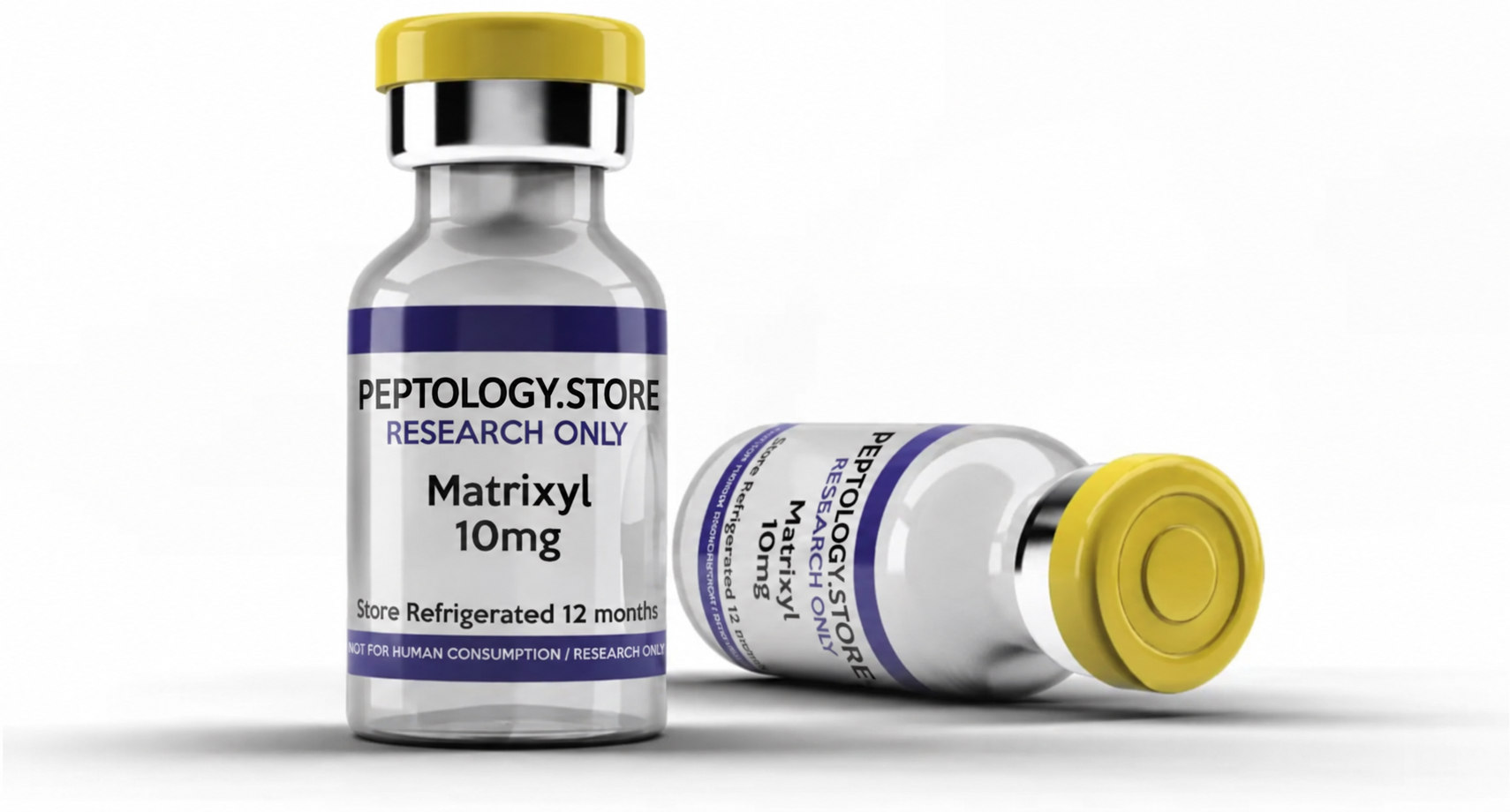
Matrixyl 10mg – High-Quality Research Peptide | 48-Hour Delivery Across EU & UK
Matrixyl 10mg (Palmitoyl Pentapeptide-4): Advanced Research Peptide for Skin & Extracellular-Matrix Studies
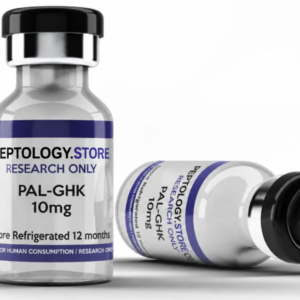
peptology.store is proud to present Matrixyl 10mg (Palmitoyl Pentapeptide-4), a research-grade peptide supplied for laboratory investigations into extracellular-matrix biology, collagen-associated pathways, fibroblast activity, skin structure, tissue remodeling, and cellular aging.
Matrixyl, commonly identified as Palmitoyl Pentapeptide-4 (Pal-KTTKS), is a lipidated pentapeptide consisting of a palmitoyl group linked to the KTTKS peptide sequence. PubChem lists its molecular formula as C₃₉H₇₅N₇O₁₀, molecular weight approximately 802.1 g/mol, and CAS number 214047-00-4.
As a dedicated EU peptide supplier and peptide vendor UK, Peptology Store provides research compounds with documented specifications intended to support controlled laboratory workflows. Whether your laboratory is based in London, Berlin, Paris, or anywhere in the European Union, our guaranteed 48 hour delivery peptide service ensures your essential research supplies arrive when you need them.
The Scientific Foundation of Matrixyl Research
Structure and Classification
Matrixyl (Palmitoyl Pentapeptide-4) is a lipidated peptide consisting of the amino-acid sequence Lys-Thr-Thr-Lys-Ser (KTTKS) linked to a palmitoyl group. The lipid modification distinguishes it from the unmodified peptide and is relevant to its use in skin-related research and cosmetic formulations.
The compound is commonly investigated in relation to:
- Extracellular-matrix biology
- Collagen-associated signaling
- Fibroblast activity
- Skin remodeling
- Cellular aging
- Cosmetic peptide research
Matrikine-Related Research
Matrixyl belongs to a broader category of peptide ingredients inspired by matrikines—small extracellular-matrix-derived peptides investigated for their potential signaling effects on skin cells.
Research into cosmetic peptides commonly examines how such molecules may influence:
- Fibroblast signaling
- Extracellular-matrix turnover
- Collagen-associated pathways
- Skin-cell proliferation
- Tissue remodeling
Recent reviews emphasize that much of the evidence for cosmetic peptides remains based on in-vitro, ex-vivo, or relatively small clinical studies, rather than large randomized clinical trials.
Extracellular-Matrix Research
The extracellular matrix (ECM) provides structural support for tissues and participates in cell signaling, repair, and remodeling.
Matrixyl is therefore investigated in experimental systems examining:
- Collagen-related pathways
- Fibroblast responses
- ECM organization
- Matrix remodeling
- Skin structural integrity
- Age-associated changes in connective tissue
Lipidated Peptide Research
The palmitoyl modification is an important structural characteristic of Matrixyl.
Researchers can use Matrixyl to investigate how lipidation may influence:
- Peptide physicochemical properties
- Molecular interactions
- Cellular exposure
- Skin-associated peptide activity
- Formulation behavior
Key Research Applications
Skin Biology Research
Matrixyl is primarily associated with skin and cosmetic research.
Potential research applications include:
- Dermal Fibroblast Studies: Investigate fibroblast responses to peptide exposure
- Extracellular-Matrix Research: Examine collagen-associated pathways
- Skin Aging Models: Study molecular changes associated with chronological and photoaging
- Skin Structure Research: Investigate changes in dermal architecture
- Cellular Signaling: Examine peptide-associated signaling responses
Collagen-Associated Research
Matrixyl is widely investigated in connection with collagen-related skin biology.
Research may examine:
- Collagen-associated gene expression
- Extracellular-matrix production
- Fibroblast activity
- Matrix remodeling
- Structural protein regulation
Importantly, claims about increased collagen synthesis should be tied to the specific experimental system used; evidence from cosmetic peptide studies does not automatically establish systemic effects.
Fibroblast Research
Dermal fibroblasts are central to extracellular-matrix production and skin structural maintenance.
Matrixyl can be investigated in models examining:
- Fibroblast proliferation
- Cellular signaling
- ECM production
- Collagen-associated responses
- Cellular stress
- Tissue-remodeling pathways
Skin-Aging Research
Matrixyl is frequently studied in experimental models of skin aging and cosmetic rejuvenation.
Research areas include:
- Fine-line formation
- Wrinkle-associated structural changes
- Skin elasticity
- Dermal density
- Extracellular-matrix remodeling
- Photoaging
Recent literature notes that cosmetic peptides are increasingly investigated for these purposes, while also emphasizing limitations in the existing clinical evidence.
Wound and Tissue-Remodeling Research
Because fibroblasts and the extracellular matrix are important components of tissue repair, Matrixyl can be incorporated into exploratory research examining:
- Fibroblast migration
- ECM remodeling
- Collagen-associated processes
- Cellular repair responses
- Tissue structural recovery
These applications should be interpreted as experimental research areas rather than established therapeutic indications.
Comparative Peptide Research
Matrixyl can also be used in comparative studies investigating how lipidation affects peptide properties.
Researchers may compare:
- Palmitoylated versus non-palmitoylated peptides
- Molecular stability
- Cellular responses
- Formulation behavior
- Experimental activity profiles
Quality Assurance: Setting the Standard for Research Compounds
Manufacturing Excellence
peptology.store supplies Matrixyl 10mg with an emphasis on analytical quality and batch traceability.
Quality documentation may include:
- HPLC Purity Analysis: Chromatographic assessment of peptide purity
- Mass Spectrometry Verification: Molecular-identity and mass confirmation
- Batch-Specific Certificates of Analysis: Documentation associated with the individual production lot
- Lyophilized Research Format: Dry presentation intended for controlled laboratory handling
- Research-Use-Only Labelling: Clearly designated for research applications
Physical and Chemical Properties
| Molecular Weight (g/mol) | 802.05 g/mol |
| Peptide Sequence | Pal-Lys-Thr-Thr-Lys-Ser |
| CAS Number | 214047-00-4 |
| Molecular Formula | C39H75N7O10 |
| Appearance | White to off-white lyophilised powder |
| Melting Point | Not applicable (decomposes before melting) |
| Research Use and Safety | |
| Caution | Handle using appropriate PPE and in compliance with relevant laboratory safety standards. |
| Intended Use | For laboratory research use only. Not for human or veterinary use. |
| Hazard Classification | Not classified as hazardous under GHS for research quantities |
| Storage, Handling and Stability | |
| Storage Temperature, Opened | -20 °C, minimise freeze-thaw cycles |
| Storage Temperature, Unopened | -20 °C recommended for long-term storage |
| Shelf Life | 2 years unopened under recommended conditions |
| Reconstitution Stability | Stable for up to 28 days at 2-8 °C in aqueous solution under sterile conditions |
reas commonly investigate Matrixyl?
A: Matrixyl is primarily investigated in skin biology, extracellular-matrix research, fibroblast studies, collagen-associated pathways, skin-aging research, photoaging models, and cosmetic peptide research.
Q: Does Matrixyl increase collagen?
A: Matrixyl has been investigated for collagen-associated effects in cosmetic and experimental research. However, the evidence varies by formulation and experimental model, and current reviews emphasize that much of the evidence for cosmetic peptides comes from in-vitro, ex-vivo, or relatively limited clinical research.
Q: Is Matrixyl suitable for human consumption?
A: No. Matrixyl 10mg supplied by peptology.store is intended for research and laboratory use only and is not supplied as an approved systemic therapeutic product.
Q: Can Matrixyl be used in cell culture research?
A: Matrixyl can be investigated in appropriate in-vitro experimental systems, including models involving fibroblast and extracellular-matrix biology. Researchers should establish concentrations, solvents, exposure periods, controls, and assay conditions according to validated laboratory protocols.
Q: How should Matrixyl be stored?
A: Store the lyophilized material according to the product-specific documentation, protected from excessive moisture, light, and unsuitable temperatures. Reconstituted material should be handled according to an appropriate laboratory stability protocol.
Q: What documentation is available with Matrixyl orders?
A: Batch-specific analytical documentation may include a Certificate of Analysis (COA) and relevant chromatographic or mass-spectrometry data, depending on the production batch.
Q: Do you offer bulk quantities of Matrixyl?
A: Bulk research supply can be discussed for qualified laboratory and institutional requirements. Researchers can contact Peptology Store regarding current availability, quantities, and documentation.
Q: Do you ship Matrixyl to EU countries?
A: Research-product availability and shipping options can be confirmed through peptology.store. Researchers should verify applicable destination-country requirements before ordering.
Q: Is Matrixyl the same as Matrixyl 3000?
A: Not necessarily. Matrixyl generally refers to Palmitoyl Pentapeptide-4 (Pal-KTTKS), whereas Matrixyl 3000 is a separate cosmetic peptide blend containing different peptide components. The exact product identity should therefore be checked before comparing specifications.
Q: What makes Matrixyl useful for skin research?
A: Its combination of a short KTTKS peptide sequence with a palmitoyl group makes Matrixyl a useful model for investigating lipidated peptide behavior and extracellular-matrix-associated skin biology.
Advance Your Research with Matrixyl 10mg
Peptology Store provides Matrixyl 10mg (Palmitoyl Pentapeptide-4) for researchers investigating skin biology, fibroblast signaling, extracellular-matrix remodeling, collagen-associated pathways, cellular aging, and cosmetic peptide mechanisms.
Whether your research focuses on dermal fibroblasts, ECM organization, photoaging, lipidated peptide behavior, or comparative cosmetic-peptide research, Matrixyl provides a defined molecular model for controlled laboratory investigation.
The current literature supports continued investigation of peptide-based approaches in skin biology, while also highlighting limitations in the clinical evidence and the need for larger, better-controlled studies.
Order today and experience the peptology.store difference – premium quality, rapid 48-hour delivery across the EU and UK, and expert support for the European research community.