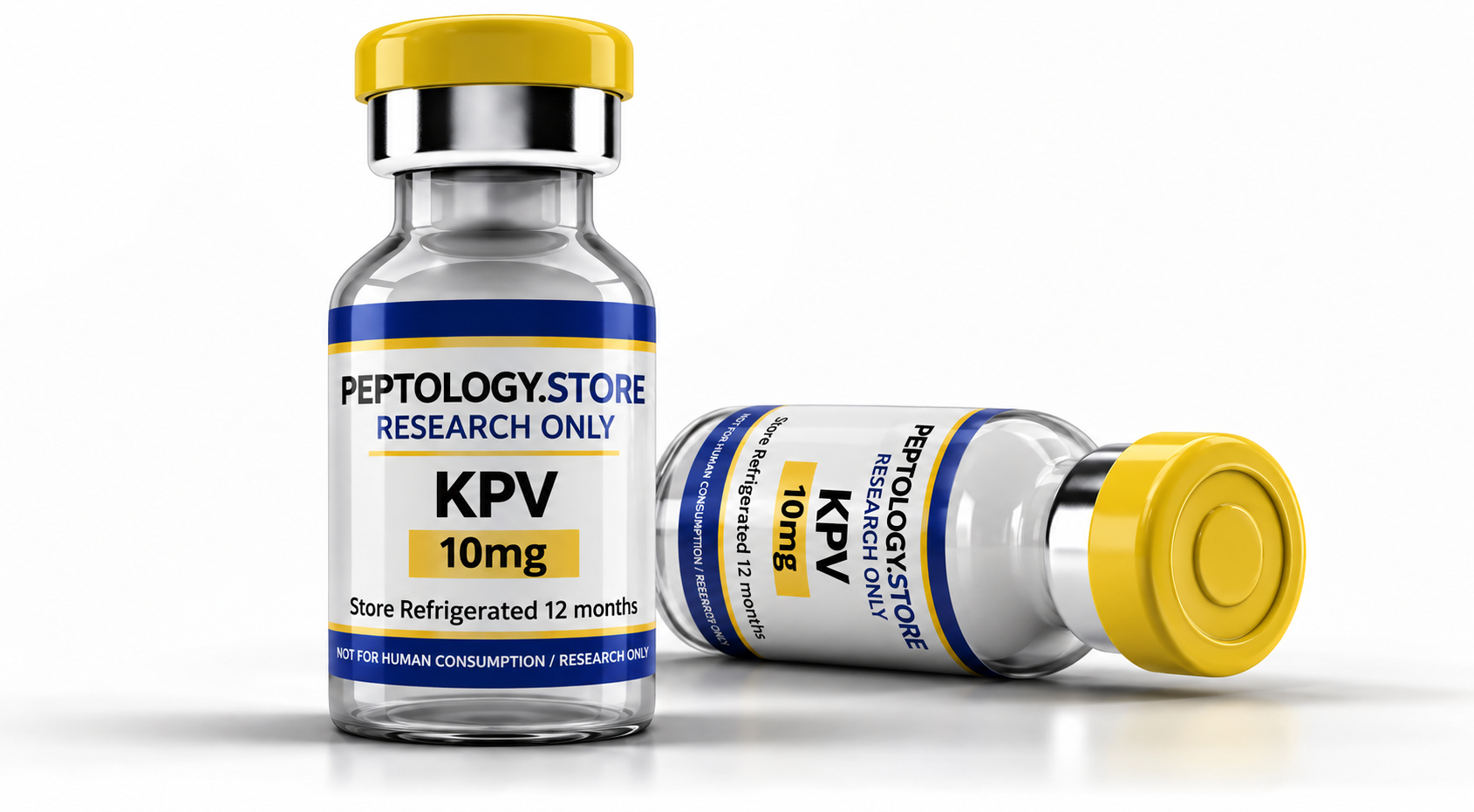
Premium KPV Peptide 10mg – High-Quality Research Peptide for Sale | 10mg per Vial | ≥98% Purity | 48-Hour Delivery Across EU & UK
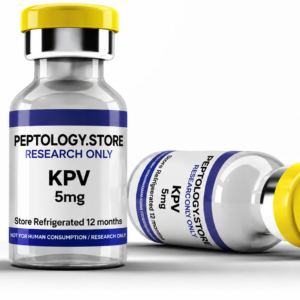
KPV 10mg: Research-Grade Anti-Inflammatory Peptide for Cellular & Inflammation Research
peptology.store is proud to present KPV 10mg, a research-grade synthetic tripeptide supplied for laboratory investigations into inflammatory signaling, intestinal epithelial biology, immune-cell responses, NF-κB pathways, skin inflammation, and cellular stress mechanisms.
KPV (Lys-Pro-Val) is the C-terminal tripeptide corresponding to residues 11–13 of α-melanocyte-stimulating hormone (α-MSH). Unlike the full α-MSH molecule, KPV lacks the central melanocortin receptor-binding sequence, and experimental studies indicate that its anti-inflammatory effects can occur through mechanisms distinct from classical melanocortin receptor activation.
As a dedicated EU peptide supplier and peptide vendor UK, Peptology Store provides research compounds with documented specifications intended to support controlled laboratory workflows.
For researchers seeking to buy peptide online for investigations into obesity pharmacotherapy, type 2 diabetes, metabolic syndrome, or non-alcoholic fatty liver disease (NAFLD), Peptology Store offers this premium research compound with comprehensive documentation, including Certificates of Analysis and batch-specific purity data . Whether your laboratory is based in London, Berlin, Paris, or anywhere in the European Union, our guaranteed 48 hour delivery peptide service ensures your research continues without interruption.
The Scientific Foundation of KPV Research
Structure and Biological Origin
KPV is a naturally derived tripeptide sequence consisting of:
Lysine-Proline-Valine (Lys-Pro-Val)
It represents the C-terminal region of α-MSH, specifically α-MSH(11–13). Research has identified KPV as an important component of the anti-inflammatory activity associated with α-MSH-related peptides.
The small molecular structure of KPV provides researchers with a defined peptide model for investigating short-peptide interactions with inflammatory and cellular signaling systems.
Anti-Inflammatory Signaling
KPV has been investigated extensively in experimental inflammation models.
Research has demonstrated effects involving:
- NF-κB signaling
- Pro-inflammatory cytokine production
- MAP kinase signaling
- Inflammatory-cell migration
- Epithelial inflammatory responses
- Cytokine-induced cellular activation
In intestinal epithelial and immune-cell models, KPV was reported to inhibit NF-κB and MAP kinase inflammatory signaling and reduce pro-inflammatory cytokine secretion.
Mechanistic Distinction from Classical Melanocortin Signaling
Although KPV originates from α-MSH, research indicates that KPV does not simply reproduce the signaling profile of the full hormone.
Experimental studies have found that KPV’s anti-inflammatory activity is not necessarily mediated through the classical melanocortin receptors. One study found that KPV did not increase cAMP and suggested that its effects were more consistent with inhibition of inflammatory signaling rather than conventional melanocortin receptor activation.
Key Research Applications
Inflammation and Immunology Research
KPV is particularly valuable for laboratory investigations into inflammatory signaling.
Research applications include:
- NF-κB Studies: Investigate regulation of inflammatory transcriptional signaling
- Cytokine Research: Examine changes in pro-inflammatory cytokine expression
- Immune-Cell Research: Study inflammatory responses in immune-cell models
- Cellular Inflammation: Investigate cytokine-induced cellular activation
- Inflammatory Resolution: Examine mechanisms involved in reducing inflammatory signaling
Gastrointestinal Research
KPV has been extensively investigated in experimental models of intestinal inflammation.
Research has examined:
- Intestinal epithelial signaling
- PepT1-mediated peptide uptake
- NF-κB activation
- Cytokine expression
- Colonic inflammatory responses
- Intestinal barrier-associated mechanisms
In experimental mouse models of colitis, KPV treatment was associated with reduced inflammatory changes and reduced expression of pro-inflammatory markers.
PepT1 Transport Research
A particularly important feature of KPV research is its relationship with PepT1, a di- and tripeptide transporter expressed in intestinal epithelial cells and induced in the colon during intestinal inflammation.
Experimental work demonstrated that KPV can be transported through PepT1 and that PepT1-associated uptake contributes to its anti-inflammatory activity in intestinal epithelial and immune-cell models.
NF-κB Signaling Research
KPV has been investigated directly in cellular models of NF-κB activation.
Research has reported that KPV can:
- Reduce NF-κB activation
- Affect IκBα degradation
- Reduce inflammatory transcriptional responses
- Decrease cytokine-associated signaling
- Suppress inflammatory mediator production
Studies in human bronchial epithelial cells also reported dose-dependent inhibition of NF-κB signaling and reductions in IL-8 and eotaxin secretion following KPV exposure.
Skin and Cutaneous Inflammation Research
Because α-MSH-related peptides have important relationships with inflammatory skin biology, KPV has also been investigated in models of cutaneous inflammation.
Research areas include:
- Keratinocyte signaling
- Skin inflammatory pathways
- Cytokine responses
- Wound-associated inflammation
- NF-κB signaling
- Cellular stress responses
KPV has been investigated as a potentially useful experimental model for separating anti-inflammatory activity from the pigmentary effects associated with full α-MSH.
Respiratory and Airway Inflammation Research
KPV has been studied in human bronchial epithelial-cell models.
Experimental research reported inhibition of:
- TNF-α-induced NF-κB signaling
- IL-8 secretion
- Eotaxin secretion
- Matrix metalloproteinase-9 activity
These findings make KPV useful for investigating inflammatory epithelial signaling in airway research models.
Quality Assurance: Setting the Standard for Research Compounds
Manufacturing Excellence
peptology.store supplies KPV 10mg with an emphasis on analytical quality and batch traceability.
Quality documentation may include:
- HPLC Purity Analysis: Analytical assessment of peptide purity
- Mass Spectrometry Verification: Molecular-identity and molecular-weight confirmation
- Batch-Specific Certificates of Analysis: Documentation associated with the individual production lot
- Lyophilized Research Format: Dry presentation intended for appropriate laboratory storage
- Research-Use-Only Labelling: Clearly designated for laboratory research
| Molecular Weight (g/mol) | 342.43 g/mol |
| Peptide Sequence | Lys-Pro-Val |
Physical and Chemical Properties
|
|
| Molecular Formula | C16H30N4O4 |
| Physical Appearance | white lyophilised solid |
| Form | Sterile filtered white lyophilized (freeze-dried) |
| Solubility | Aqueous soluble |
| Appearance | White to off-white lyophilised powder |
| Melting Point | Not applicable (decomposes before melting) |
| Analytical and Quality Control | |
| HPLC Result | Shows min 99% Purity |
| Mass Spectrum | Consistent with structure |
| Purity % | >99% |
| Research Use and Safety | |
| Caution | Research use only / Not for human or veterinary use |
| Intended Use | For laboratory research use only. Not for human or veterinary use. |
| Hazard Classification | Not classified as hazardous under GHS for research quantities |
| Storage, Handling and Stability | |
| Storage Temperature, Opened | Lyophilized peptides although stable at room temperature for 3 months, should be stored desiccated below -18°C. Upon reconstitution of the peptide it should be stored at 4°C between 2-21 days and for future use below -18°C. |
| Storage Temperature, Unopened | -20 °C recommended for long-term storage |
| Shelf Life | 2 years unopened under recommended conditions |
| Reconstitution Stability | Stable for up to 28 days at 2-8 °C in aqueous solution under sterile conditions |
Stability and Handling
KPV 10mg should be handled according to the product-specific documentation and established laboratory procedures.
- Lyophilized Material: Store according to the temperature specified in the batch documentation.
- Light Protection: Protect the material from unnecessary direct light exposure.
- Moisture Protection: Keep the vial tightly sealed and protected from humidity.
- Reconstituted Material: Establish solution-storage conditions according to validated laboratory procedures and available stability information.
- Aliquoting: Where appropriate, aliquot prepared research solutions to minimize repeated freeze-thaw exposure.
- Temperature Control: Avoid unnecessary temperature fluctuations during storage and handling.
- Documentation: Record preparation and storage conditions as part of the experimental record.
Real-World Research Applications and Investigator Studies
Intestinal Inflammation Studies
One of the best-characterized areas of KPV research involves intestinal inflammation.
In human intestinal epithelial and immune-cell models, KPV was shown to reduce inflammatory signaling through effects involving NF-κB and MAP kinase pathways. Experimental mouse models of DSS- and TNBS-induced colitis also demonstrated reduced inflammatory markers following KPV exposure.
PepT1-Mediated Cellular Uptake
Research has identified PepT1 as an important transporter involved in KPV uptake.
Because PepT1 is expressed in intestinal epithelial cells and becomes more prominent in inflamed intestinal tissue, this mechanism provides an important model for investigating how short peptides interact with inflammatory epithelial pathways.
Inflammatory Cell Migration
Experimental studies have investigated KPV’s effects on inflammatory-cell recruitment.
In a mouse model of crystal-induced peritonitis, KPV significantly reduced accumulation of polymorphonuclear leukocytes. The observed activity was not blocked by a melanocortin receptor antagonist, supporting the possibility of a mechanism distinct from classical MC3/4 receptor signaling.
Airway Epithelial Research
KPV has also been investigated in human bronchial epithelial cells.
Studies found dose-dependent suppression of NF-κB signaling, IL-8 secretion, eotaxin secretion, and MMP-9 activity, providing an experimental framework for studying KPV in inflammatory airway models.
Cutaneous Inflammation Research
Research involving keratinocytes has investigated KPV-related signaling in skin inflammatory systems.
These studies provide opportunities to examine:
- Keratinocyte responses
- Intracellular calcium signaling
- Cytokine pathways
- NF-κB regulation
- Inflammatory skin biology
Key Research Features
- 10mg Research Presentation
- KPV / Lys-Pro-Val
- α-MSH(11–13) Derived Tripeptide
- Inflammation Research
- NF-κB Signaling Studies
- MAP Kinase Research
- Cytokine Signaling Research
- Intestinal Inflammation Studies
- PepT1 Transport Research
- Epithelial-Cell Biology
- Immune-Cell Research
- Airway Inflammation Research
- Skin Inflammation Research
- Inflammatory-Cell Migration Studies
- Lyophilized Research Format
- Batch-Specific Documentation
- Research-Use-Only Material
- Laboratory-Oriented Handling Guidance
- EU & UK Research Supply through Peptology Store
Frequently Asked Questions
Q: What is KPV?
A: KPV is a short tripeptide consisting of Lys-Pro-Val. It corresponds to residues 11–13 of α-melanocyte-stimulating hormone (α-MSH) and has been extensively investigated for anti-inflammatory activity in cellular and animal research models.
Q: What is KPV 10mg used for?
A: KPV 10mg is supplied for laboratory research involving inflammatory signaling, NF-κB pathways, intestinal epithelial biology, PepT1 transport, cytokine responses, immune-cell signaling, airway inflammation, and skin inflammatory research.
Q: What is the amino acid sequence of KPV?
A: The sequence is Lys-Pro-Val (KPV). It represents the C-terminal tripeptide of α-MSH, also referred to as α-MSH(11–13).
Q: What makes KPV different from α-MSH?
A: KPV represents only the C-terminal three amino acids of α-MSH. Unlike the complete hormone, KPV lacks the central melanocortin receptor-binding pharmacophore. Research suggests that KPV can retain anti-inflammatory activity through mechanisms distinct from classical melanocortin receptor activation.
Q: Does KPV affect NF-κB signaling?
A: Yes. Experimental studies have reported that KPV inhibits NF-κB activation in intestinal epithelial and airway epithelial models and reduces associated inflammatory mediator production.
Q: What is PepT1 and why is it relevant to KPV research?
A: PepT1 is a transporter capable of transporting di- and tripeptides. Research has demonstrated PepT1-mediated uptake of KPV in intestinal epithelial and immune-cell models and linked this pathway with KPV’s observed anti-inflammatory effects.
Q: Has KPV been studied in intestinal inflammation?
A: Yes. KPV has been investigated in DSS- and TNBS-induced mouse models of colitis. Experimental treatment was associated with reduced inflammatory changes and reduced expression of pro-inflammatory markers.
Q: Has KPV been studied in airway inflammation?
A: Yes. Human bronchial epithelial-cell research has reported inhibition of TNF-α-induced NF-κB signaling, IL-8 secretion, eotaxin secretion, and MMP-9 activity following KPV exposure.
Q: Has KPV been studied for skin inflammation?
A: Yes. KPV and related α-MSH-derived peptides have been investigated in skin and keratinocyte models, including research examining inflammatory signaling and intracellular responses.
Q: Is KPV suitable for human consumption?
A: No. KPV 10mg supplied by peptology.store is intended for research and laboratory use only and is not marketed as an approved human therapeutic.
Q: Does KPV have established clinical efficacy for inflammatory diseases?
A: No established clinical efficacy should be inferred from the available research. Much of the evidence comes from cellular and animal models, and further research is required to determine the safety, pharmacology, and clinical usefulness of KPV in humans.
Q: How should KPV be stored?
A: Store the lyophilized research material according to the product-specific batch documentation. Protect it from moisture, excessive light exposure, and unsuitable temperatures. Reconstituted material should be handled according to an appropriate laboratory stability protocol.
Q: Can KPV be used in cell culture research?
A: Yes. KPV has been investigated in several in-vitro systems, including intestinal epithelial cells, immune-cell models, keratinocytes, and bronchial epithelial cells. Researchers should determine concentrations, exposure periods, controls, and assay conditions according to validated laboratory protocols.
Q: What documentation is provided with KPV orders?
A: A batch-specific Certificate of Analysis (COA) may provide analytical information for the supplied material. Additional analytical documentation should be confirmed for the specific production batch.
Q: Do you offer bulk quantities of KPV?
A: Bulk research supply can be discussed for qualified laboratory and institutional requirements. Researchers can contact Peptology Store regarding current availability and documentation.
Q: Do you ship KPV to EU countries?
A: Shipping availability for KPV 10mg can be confirmed through peptology.store, subject to applicable destination-country requirements and research-product restrictions.
Q: What makes KPV valuable for inflammation research?
A: KPV provides a particularly useful model because it is a small, defined tripeptide derived from α-MSH that has demonstrated anti-inflammatory activity across several experimental systems, including intestinal and airway epithelial models. Its reported effects on NF-κB signaling, cytokine production, and PepT1-mediated uptake make it valuable for studying inflammatory mechanisms.
Advance Your Research with KPV 10mg
Peptology Store provides KPV 10mg for researchers investigating inflammatory signaling, intestinal epithelial biology, NF-κB pathways, PepT1-mediated peptide transport, cytokine responses, airway inflammation, and skin inflammatory mechanisms.
Whether your work focuses on gastrointestinal inflammation, epithelial signaling, immune-cell responses, airway biology, or peptide-mediated regulation of inflammatory pathways, KPV provides a defined tripeptide model for controlled laboratory investigation.
The available evidence is primarily based on cellular and preclinical research. Experimental findings should therefore be interpreted within the appropriate research context rather than as evidence of established human therapeutic efficacy.
Order today and experience the Peptology Store difference – premium quality, rapid 48-hour delivery across the EU and UK, and expert support for the European research community.