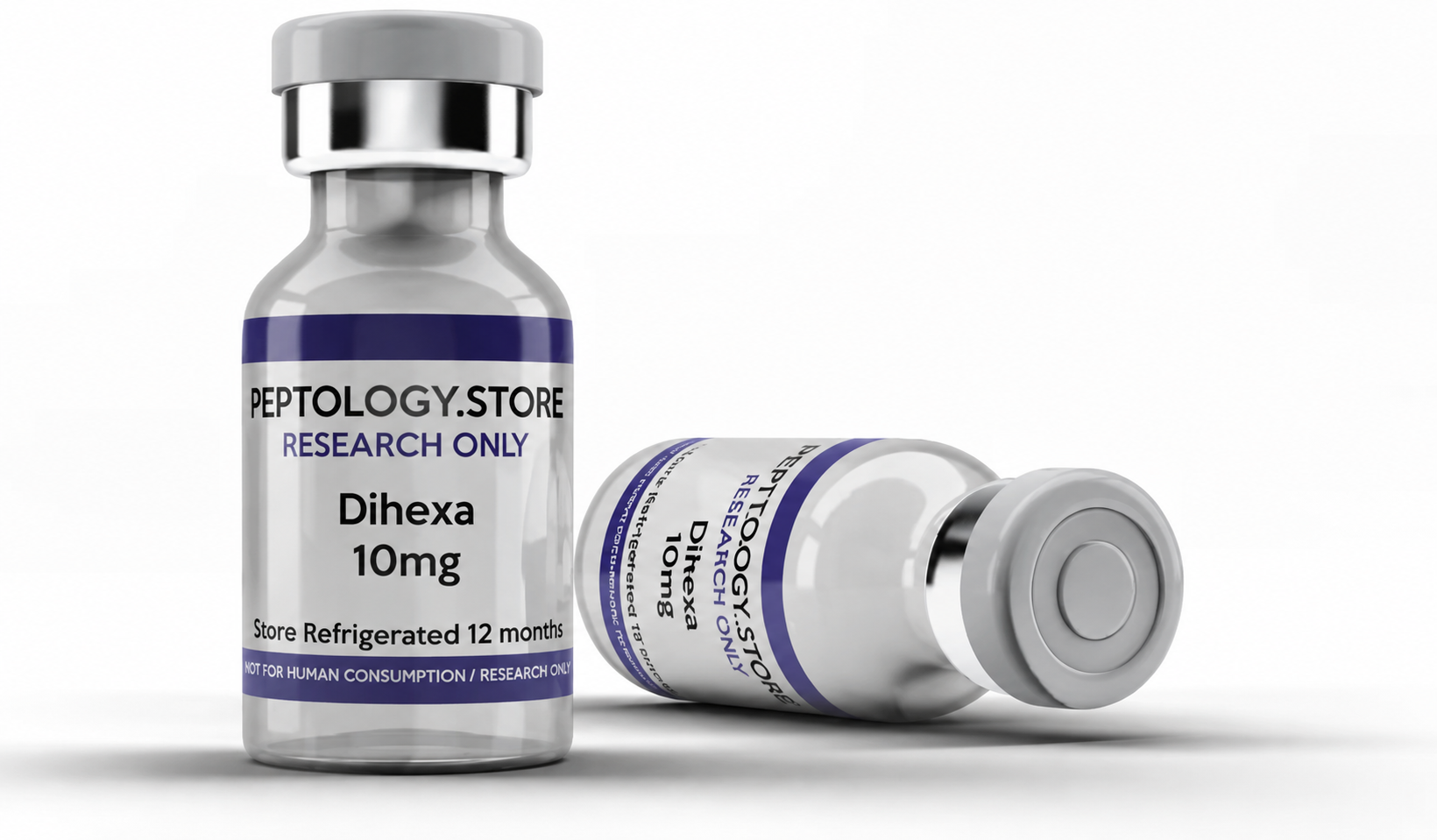
Premium Dihexa for Sale | 10mg Research Compound | High-Purity Research Material | EU & UK Delivery
Dihexa 10mg: A Research Compound for Advanced Neurobiology Studies
peptology.store is proud to present Dihexa 10mg, a research-grade compound supplied for laboratory investigation and advanced neurobiology research. As a trusted peptide vendor UK and leading EU peptide supplier, we provide researchers across Europe with Dihexa 10mg supported by applicable product documentation and quality-control information.
Dihexa has been investigated in experimental research involving neurotrophic signaling, neuronal connectivity, synaptic function, and related molecular pathways. Its proposed mechanisms and biological effects remain subjects of scientific investigation, making careful experimental design and appropriate research controls essential.
Dihexa, also known as N-hexanoic-Tyr-Ile-(6) aminohexanoic amide, or its developmental code name PNB-0408, is a synthetic oligopeptide derived from angiotensin IV. It binds with high affinity to hepatocyte growth factor (HGF) and interacts with its receptor, c-Met.
The molecular formula of Dihexa is C27H44N4O5, with a molar mass of 504.672 g·mol−1.
Dihexa consists of two hydrophobic amino acids—Tyr-Ile—with the full sequence as follows: Hexanoyl-Tyr-Ile-Ahx-NH2.
Solubility Information
Solubility: Dihexa is hydrophobic and poorly soluble in water; DMSO is the solvent reported in the literature.
Reported solubility data:
- Dihexa dissolves well in DMSO at a concentration of 1mg/ml.
This solubility profile influences the format in which Dihexa is supplied for research. Researchers intending to work with the lyophilised version should ensure access to DMSO or a similar solvent for proper handling.
Storage Guidelines
Store the lyophilised peptide at -20°C. Once reconstituted, use it immediately or store it at 2–8°C for a short duration. Avoid repeated freeze-thaw cycles.
For researchers seeking to buy peptide online for investigations into growth hormone dynamics, tissue regeneration, neurological function, or metabolic regulation, peptology.store offers this premium blend with comprehensive documentation, including Certificates of Analysis and batch-specific purity data. Whether your laboratory is based in London, Berlin, Paris, or anywhere in the European Union, our guaranteed 48 hour delivery peptide service ensures your research continues without interruption.
The Scientific Foundation of Dihexa Research
Understanding Dihexa and Its Research Significance
Dihexa is an investigational compound that has attracted research interest in neurobiology, synaptic plasticity, and neuronal signaling. It was developed from research involving angiotensin IV-related pathways and has been studied experimentally for its potential interactions with biological mechanisms involved in neuronal growth and connectivity.
Unlike growth hormone secretagogue blends, Dihexa does not primarily target the growth hormone axis. Its research significance is instead associated with experimental investigation of neurotrophic signaling pathways and processes involved in synaptic structure and neuronal communication.
Proposed Mechanism of Action
Research has explored Dihexa’s interaction with the hepatocyte growth factor (HGF)/c-Met signaling system, a biological pathway involved in cellular growth, survival, migration, and tissue development.
HGF binds to the c-Met receptor, a receptor tyrosine kinase expressed in numerous tissues, including the nervous system. Activation of this pathway can influence several intracellular signaling cascades associated with cellular development and survival.
Experimental research has investigated whether Dihexa may influence HGF-related signaling and thereby support studies examining:
- Neuronal Growth: Mechanisms involved in neurite development and neuronal connectivity.
- Synaptogenesis: The formation and maintenance of connections between neurons.
- Synaptic Plasticity: Biological processes involved in changes to synaptic strength and communication.
- Cellular Signaling: Downstream pathways associated with HGF/c-Met receptor activation.
The exact biological effects of Dihexa remain an area of ongoing scientific investigation, and experimental findings should not be interpreted as established therapeutic effects.
Key Research Applications
Neurobiology and Neuronal Signaling Research
Dihexa is primarily of interest in laboratory research investigating neuronal communication and neurotrophic signaling pathways. Its experimental properties make it a potential research tool for studying:
- Neuronal Connectivity: Investigating molecular mechanisms involved in connections between neurons.
- Synaptic Signaling: Examining how changes in cellular signaling influence synaptic communication.
- Neurite Development: Studying processes involved in neuronal extension and structural development.
- Signal Transduction: Exploring HGF/c-Met-associated intracellular signaling pathways.
Synaptogenesis and Synaptic Plasticity Studies
Synapses are specialised structures that enable communication between neurons. The formation, maintenance, and modification of synapses are central areas of neuroscience research.
Dihexa has been investigated experimentally in connection with:
- Synapse Formation: Research into mechanisms regulating the development of new neuronal connections.
- Synaptic Maintenance: Investigation of molecular processes involved in preserving synaptic structures.
- Neural Network Development: Studies examining how changes in connectivity influence neural networks.
- Cellular Plasticity: Research into adaptive changes occurring within neuronal systems.
Neurodegeneration Research
Experimental models of neurodegenerative disease frequently investigate processes involving neuronal loss, synaptic dysfunction, inflammation, and altered cellular signaling.
Dihexa may be used as an experimental compound in research examining:
- Neuronal Survival Pathways: Mechanisms associated with cellular resilience and survival.
- Synaptic Dysfunction: Biological processes contributing to impaired neuronal communication.
- Neurotrophic Signaling: The role of growth-factor-associated pathways in nervous system research.
- Cellular Repair Mechanisms: Experimental investigation of pathways associated with neuronal structure and maintenance.
These applications represent areas of scientific investigation and do not establish Dihexa as a treatment for neurological disorders.
Cognitive and Memory Research
Learning and memory depend on complex processes involving synaptic plasticity, neuronal communication, and structural changes within neural networks.
Researchers may investigate Dihexa in experimental studies involving:
- Memory Formation: Molecular and cellular mechanisms associated with memory encoding.
- Learning Processes: Changes in neuronal networks associated with learning.
- Synaptic Plasticity: The relationship between synaptic modifications and cognitive function.
- Neural Circuit Function: Experimental analysis of communication within interconnected neuronal systems.
Findings from preclinical or experimental research should not be interpreted as evidence of approved cognitive or therapeutic benefits in humans.
HGF/c-Met Signaling Research
The HGF/c-Met signaling pathway is involved in a wide range of biological processes beyond neuroscience. Research involving this pathway may examine cellular growth, migration, differentiation, and survival.
Dihexa provides researchers with an experimental compound for investigating aspects of:
- Growth-Factor Signaling: Interactions involving HGF-associated biological pathways.
- Receptor Activation: Mechanisms associated with c-Met receptor signaling.
- Intracellular Signaling Cascades: Downstream molecular pathways involved in cellular responses.
- Cellular Communication: How extracellular signals influence cellular behavior.
Because the HGF/c-Met pathway is involved in multiple physiological processes, experimental results should be interpreted carefully within the specific context of each research model.
Cellular Growth and Structural Research
Research into neuronal structure and cellular growth examines how cells develop, establish connections, and maintain functional networks.
Dihexa may support experimental investigations involving:
- Neuronal Morphology: Structural characteristics and development of neurons.
- Cellular Connectivity: Processes involved in establishing communication between cells.
- Neurite Outgrowth: Experimental models examining neuronal extensions.
- Network Formation: Research into the organisation and development of neuronal systems.
Advanced Neuropharmacology Research
Dihexa is also of interest in neuropharmacological research investigating how experimental compounds interact with molecular systems involved in neuronal signaling.
Potential areas of investigation include:
- Molecular Pharmacology: Studying compound interactions with biological signaling systems.
- Receptor-Associated Mechanisms: Examining pathways associated with receptor activation.
- Experimental Neurotrophic Research: Investigating mechanisms associated with neuronal growth and connectivity.
- Structure–Activity Relationships: Exploring how chemical structure may influence biological interactions.
Research Considerations
Dihexa remains an investigational research compound. Research involving Dihexa should be conducted using appropriate experimental controls, validated analytical methods, and applicable institutional safety procedures.
Researchers should carefully consider the biological complexity of the HGF/c-Met signaling pathway when designing experiments, as this pathway is involved in multiple cellular processes across different tissues.
Quality Assurance: Setting the Standard for Research Compounds
Manufacturing Excellence
peptology.store sources Dihexa 10mg through controlled manufacturing and quality-assurance processes designed to support research applications.
Quality-control procedures may include:
- HPLC Purity Analysis: Analytical testing used to evaluate product purity
- Mass Spectrometry Verification: Molecular identity and mass confirmation where applicable
- Batch-Specific Certificates of Analysis: Documentation associated with individual production batches
- Controlled Manufacturing Processes: Production procedures designed to support batch consistency
- Research-Use Only Labeling: Product designated strictly for research and laboratory applications
Chemical and Product Specifications
| Specification | Detail |
|---|
| Product Name | Dihexa |
| Product Strength | 10 mg per vial |
| Form | Lyophilized powder |
| Appearance | White to off-white lyophilized powder |
| Purity | Batch-specific analytical verification |
| Research Category | Neurobiology and cellular signaling research |
| Primary Research Interest | Growth-factor-related and neuronal signaling pathways |
| Storage (Lyophilized) | Store according to batch-specific recommendations; protect from light and moisture |
| Storage (Reconstituted) | Follow validated laboratory protocol and batch-specific stability guidance |
| Intended Use | Research and laboratory use only |
| Documentation | Certificate of Analysis provided with applicable batches |
Stability and Handling Guidelines
Lyophilized Powder Storage
Store lyophilized Dihexa 10mg according to the storage conditions specified in the product documentation and Certificate of Analysis.
General laboratory handling principles include:
- Protect material from excessive light exposure
- Protect from moisture
- Keep the vial tightly sealed when not in use
- Store according to validated batch-specific temperature recommendations
- Avoid unnecessary exposure to fluctuating environmental conditions
Reconstitution Guidance
Reconstitution procedures should be determined by the researcher’s validated laboratory protocol and the specific requirements of the experimental system.
General laboratory handling principles include:
- Allow the vial and selected solvent to equilibrate appropriately before opening when required by laboratory procedures
- Select a suitable solvent or buffer based on the validated research protocol
- Introduce solvent carefully to minimize unnecessary foaming or material loss
- Mix gently according to laboratory procedure
- Label the prepared solution with the preparation date and relevant batch information
- Store the reconstituted material according to validated stability requirements
Reconstituted Solution Storage
The stability of reconstituted research compounds can depend on several variables, including:
- Solvent selection
- Final concentration
- Storage temperature
- Container type
- Light exposure
- Duration of storage
Researchers should establish and follow validated storage conditions appropriate to their experimental protocol and avoid repeated unnecessary freeze-thaw cycles where applicable.
Real-World Research Applications and Experimental Research Areas
Neurotrophic Signaling Research
Researchers investigating neuronal signaling pathways have shown interest in Dihexa because of its potential interactions with biological mechanisms involved in cellular communication and neurotrophic signaling.
Experimental research involving Dihexa may focus on:
- Molecular pathways associated with neuronal communication
- Growth-factor-related signaling
- Cellular interactions involved in neural systems
- Mechanisms associated with neuronal structure and connectivity
- Downstream signaling responses in controlled laboratory models
These research areas make Dihexa a compound of interest for investigators studying the molecular mechanisms that influence communication and organization within neuronal systems.
HGF and c-Met Signaling Research
One of the primary scientific areas of interest surrounding Dihexa involves research into pathways associated with hepatocyte growth factor (HGF) and the c-Met receptor.
The HGF/c-Met signaling system is involved in numerous biological processes, including cellular growth, migration, differentiation, and tissue development. Experimental models may be used to investigate how molecular interactions within this pathway influence cellular responses.
Research applications may include:
- Receptor-Mediated Signaling: Investigating signaling mechanisms associated with c-Met activation
- Cellular Communication: Examining interactions between growth factors and target cells
- Signal Transduction: Studying downstream molecular responses
- Cellular Growth Models: Investigating mechanisms associated with cell development and organization
- Neurobiological Applications: Exploring the role of growth-factor-related signaling in neuronal systems
Synaptic Development and Connectivity Studies
Synaptic connections are essential for communication between neurons. Dihexa has attracted research interest in experimental systems designed to investigate molecular mechanisms associated with synaptic development and neuronal connectivity.
Potential research applications include:
- Synapse formation studies
- Neuronal connectivity models
- Cellular communication research
- Synaptic protein investigations
- Neurite development studies
- Neural network organization
Researchers may use controlled laboratory models to evaluate how molecular signaling influences structural and functional interactions between neuronal cells.
Neurodegenerative Research Models
Dihexa may also be investigated in experimental research involving mechanisms associated with neuronal injury, degeneration, and synaptic dysfunction.
Potential areas of investigation include:
- Experimental models of neuronal degeneration
- Synaptic dysfunction research
- Cellular stress studies
- Neurobiological signaling pathways
- Mechanisms associated with neuronal survival
- Neural tissue research models
These experimental applications are intended to support mechanistic scientific investigation and should not be interpreted as establishing therapeutic effects or clinical benefits.
Cellular Differentiation and Morphology Studies
Researchers studying cellular development may investigate how growth-factor-related signaling pathways influence cell morphology, migration, differentiation, and communication.
Dihexa may be relevant to laboratory investigations involving:
- Cellular Morphology: Examining structural changes in experimental cell models
- Neuronal Development: Investigating cellular processes associated with neuronal structure
- Neurite Formation: Studying mechanisms involved in cellular extensions and connectivity
- Cell Migration: Evaluating molecular pathways associated with movement and organization
- Signal-Response Relationships: Examining how cells respond to controlled molecular stimuli
Comparative Signaling Studies
Dihexa may provide researchers with an opportunity to investigate complex signaling pathways and compare responses across different experimental models.
Potential comparative studies may examine:
- Differences between cellular signaling pathways
- Receptor-specific biological responses
- Downstream molecular mechanisms
- Species and cell-model differences
- Variations in experimental signaling responses
- Time-dependent cellular changes
The selection of appropriate research models remains important because biological responses may vary depending on cell type, species, experimental conditions, and methodology.
Experimental Design and Mechanistic Studies
Research involving Dihexa may require carefully controlled experimental designs to investigate its molecular and biological characteristics.
Important research considerations may include:
- Selection of appropriate cellular or experimental models
- Evaluation of molecular signaling pathways
- Assessment of receptor-related interactions
- Measurement of cellular and structural responses
- Analysis of time-dependent biological changes
- Independent validation of experimental findings
Because research outcomes may vary significantly between experimental systems, investigators should use validated methodologies and appropriate experimental controls.
Growth-Factor-Related Cellular Research
The interaction between growth factors, receptors, and downstream signaling pathways remains an important area of modern biological research.
Dihexa may be investigated as part of studies examining:
- Growth-factor-associated signaling
- Receptor activation mechanisms
- Cellular communication pathways
- Molecular interactions
- Signal transduction processes
- Neuronal and cellular connectivity
These research applications contribute to broader scientific efforts aimed at understanding the complex mechanisms that regulate cellular communication and biological organization.
Key Benefits for Research Applications
- Research-Grade Format: Designed for controlled laboratory investigation
- Neurobiology Research Interest: Relevant to studies of neuronal signaling and cellular communication
- Cellular Signaling Studies: Supports investigation of complex molecular pathways
- Growth-Factor Pathway Research: Relevant to studies involving HGF-related and c-Met-associated signaling
- Synaptic Research Applications: Useful for experimental models investigating synaptic function and connectivity
- Neuronal Connectivity Studies: Supports laboratory investigation into neural cellular communication
- Lyophilized Format: Suitable for controlled laboratory storage and experimental preparation
- Batch Documentation: Analytical documentation available according to product and batch procedures
- Research-Use Only: Clearly designated for laboratory and scientific investigation
- EU & UK Availability: Research-compound delivery options available across applicable regions
Frequently Asked Questions
Q: What is Dihexa 10mg?
A: Dihexa 10mg is a research compound supplied in a lyophilized format for laboratory investigation. It has attracted scientific interest in research involving neuronal signaling, cellular communication, synaptic function, and growth-factor-related pathways.
It is intended strictly for research and laboratory use only.
Q: What research areas commonly investigate Dihexa?
A: Dihexa may be investigated in laboratory research involving:
- Neurobiology
- Neuronal signaling
- Synaptic function
- Cellular communication
- Growth-factor-related pathways
- HGF-associated signaling
- c-Met-associated research
- Experimental models of neuronal connectivity
Q: What is the primary scientific interest surrounding Dihexa?
A: A major area of scientific interest involves its potential relationship with biological pathways associated with hepatocyte growth factor (HGF) and c-Met signaling. Researchers may use controlled experimental systems to investigate molecular mechanisms associated with these pathways.
Q: Is Dihexa intended for human use?
A: No. Dihexa 10mg is supplied strictly for research and laboratory use only. It is not presented as a product for human or veterinary use.
Q: How should Dihexa 10mg be stored?
A: Lyophilized material should be stored according to the batch-specific product documentation and Certificate of Analysis. Researchers should protect the material from inappropriate light, moisture, and environmental conditions.
Q: How should Dihexa be reconstituted?
A: Reconstitution should be performed according to a validated laboratory protocol appropriate for the specific experimental application. Solvent selection, concentration, and storage conditions should be determined by the research methodology and applicable product documentation.
Q: What documentation is provided with Dihexa 10mg?
A: Batch-specific analytical documentation, including a Certificate of Analysis where applicable, should be reviewed to verify the specifications associated with the individual batch.
Q: Do you ship Dihexa 10mg across the EU and UK?
A: peptology.store provides delivery options for eligible research customers across applicable EU and UK regions. Delivery availability, timing, and eligibility may vary depending on destination and applicable requirements.
Q: Can Dihexa be used in combination research studies?
A: Combination studies may be conducted by qualified researchers when scientifically justified and appropriately designed. Compatibility, interactions, stability, and experimental outcomes should be independently evaluated as part of the research protocol.
Q: Is Dihexa suitable for neuroscience research?
A: Dihexa is of interest in laboratory research involving neuronal signaling, synaptic mechanisms, cellular communication, and growth-factor-related pathways. Researchers should determine its suitability based on their specific experimental objectives and validated protocols.
Advance Your Research with Dihexa 10mg
peptology.store provides Dihexa 10mg for researchers investigating complex questions in neurobiology, cellular signaling, synaptic function, and growth-factor-related biological pathways.
Whether your laboratory is exploring neuronal communication, investigating molecular signaling mechanisms, studying synaptic processes, or examining experimental models of cellular connectivity, Dihexa 10mg provides a research-focused format for controlled scientific investigation.