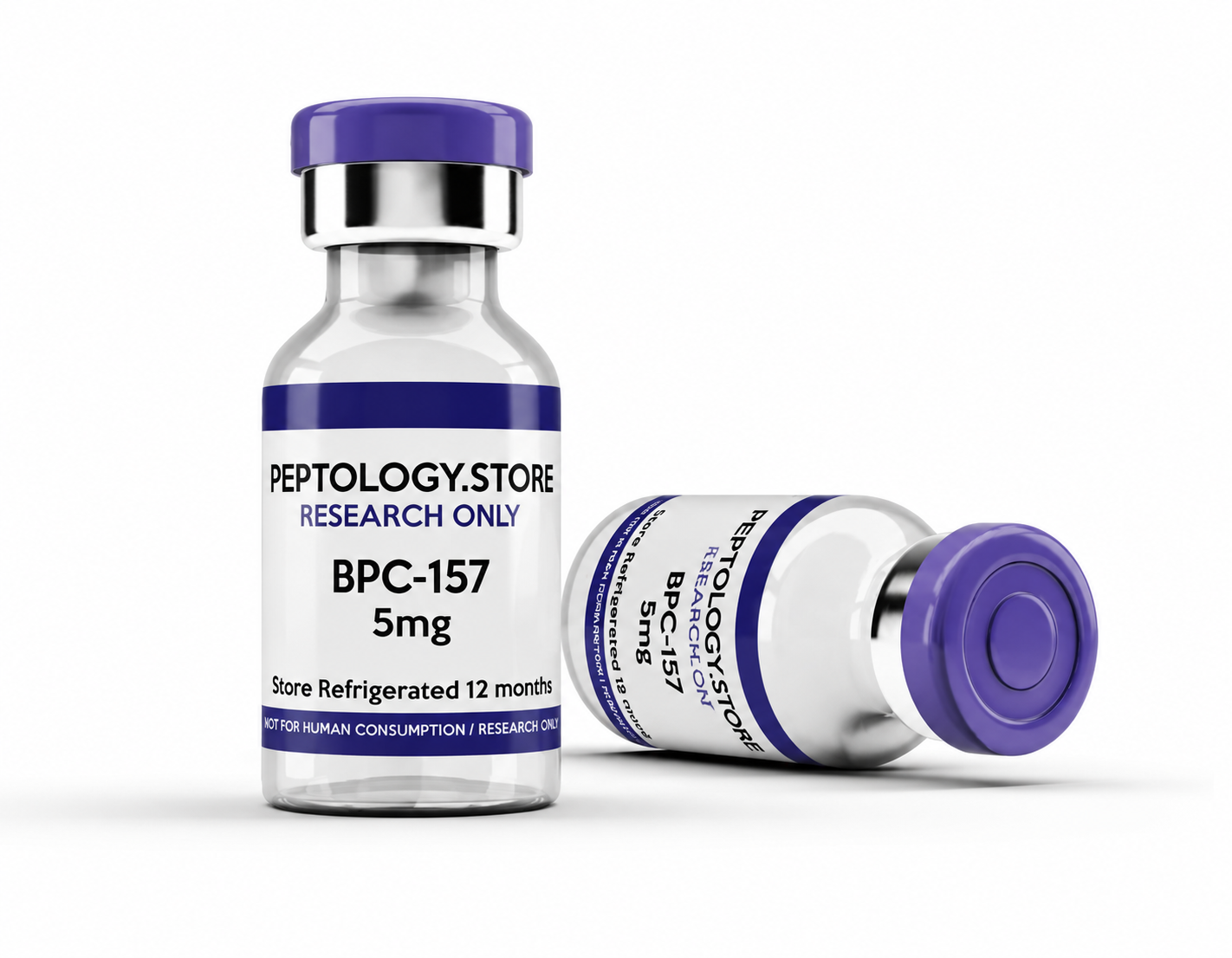
Premium BPC-157 5mg Research Peptide for Sale | 5mg Lyophilized Powder | ≥99% Purity | 48-Hour Delivery Across EU & UK
BPC-157 5mg – Research Peptide
Buy BPC-157 5mg Peptide EU & UK, peptology.store is proud to present BPC-157 5mg Peptide, a premium research-grade small molecule compound manufactured to the highest analytical standards. As a trusted peptide vendor uk and leading EU peptide supplier, we provide researchers across Europe with BPC-157 5mg for sale that delivers exceptional purity, consistency, and documented quality for advanced studies in metabolic regulation, exercise physiology, and mitochondrial biogenesis. Buy BPC-157 5mg Peptide EU & UK
BPC 157, offered at 5mg is a unique, specialised research peptide developed for advanced scientific exploration in tissue. This product is ideal for laboratory settings where precision and reliability are paramount.
- Product Name: BPC-157 5mg
- Catalogue Number: BPC5-024
- Molecular Formula: C62H98N16O22
- Molecular Weight: 1479.6 g/mol
- Purity: 99%
- Sequence: H-Gly-Glu-Pro-Pro-Pro-Gly-Lys-Pro-Ala-Asp-Asp-Ala-Gly-Leu-Val-OH
- Form: Lyophilised Solid
Storage and Handling:
BPC-157 is supplied as a lyophilised solid to ensure maximum stability and ease of use in research environments. Store the sealed vial at -20°C, protected from light and moisture. All handling and laboratory procedures are determined by the receiving laboratory under its own protocols.
Synthesis and Quality Assurance:
BPC-157 is meticulously synthesised through a controlled process that guarantees high purity and stability, making it suitable for precise scientific studies. Our commitment to excellence ensures that each batch undergoes stringent quality control to meet the rigorous standards that researchers require.
Why Choose Peptology Store for BPC-157 in the EU & UK?
Since 2012, Peptology Store has been a trusted name in the peptide industry. Our reputation for delivering high-purity peptides suitable for research is backed by over a decade of experience. Unlike many other suppliers, we work directly with our trusted manufacturer, ensuring that each batch meets the highest standards for quality and purity. We do not purchase from third-party resellers, which allows us to maintain consistency, reliability, and unmatched product quality in every vial.
Legal and Safety Information:
Peptology Store proudly provides BPC-157 strictly for scientific and research use. We are dedicated to supporting the research community and ensuring our products meet stringent quality standards and legal requirements.
If you require high-quality BPC 157 for your research in the UK & EU, explore our range of peptides designed for scientific rigour and innovation.
For researchers seeking to buy peptide online for investigations into metabolic disorders, exercise physiology, or mitochondrial function, peptology.store offers this premium research compound with comprehensive documentation, including Certificates of Analysis and batch-specific purity data. Whether your laboratory is based in London, Berlin, Paris, or anywhere in the European Union, our guaranteed 48 hour delivery peptide service ensures your research continues without interruption.
The Scientific Foundation of BPC-157 Research
Discovery and Development
BPC-157 is a synthetic 15-amino-acid peptide derived from a protective protein found in human gastric juice. It has been investigated extensively in preclinical research for its potential effects on tissue protection, healing, angiogenesis, and cellular signaling. Research into BPC-157 has enabled investigators to explore mechanisms involved in tissue repair and recovery across multiple experimental models.
Mechanism of Action: Tissue Repair and Cellular Signaling
BPC-157 has been investigated for its effects on multiple signaling pathways involved in tissue repair, angiogenesis, and cellular protection.
BPC-157: The peptide has been studied in tissues with active repair and regenerative processes, including gastrointestinal tissue, connective tissue, vascular tissue, and nervous tissue. Research has investigated its potential influence on:
- Angiogenesis: VEGF-related signaling and vascular formation
- Fibroblast activity: Cell migration and proliferation involved in tissue repair
- Tissue remodeling: Processes involved in extracellular matrix organization
- Nitric oxide signaling: Modulation of NO-related pathways involved in vascular function
- Cellular protection: Investigation of protective responses during tissue injury and stress
BPC-157 Research Profile
BPC-157 has been investigated across a range of experimental models. Key research characteristics include:
- Tissue Repair: Investigated for cellular and tissue recovery following experimental injury.
- Angiogenesis: Studied for effects on blood-vessel formation and VEGF-related signaling.
- Fibroblast Activity: Investigated for effects on fibroblast migration and proliferation.
- Gastrointestinal Protection: Extensively studied in experimental models of gastric and intestinal injury.
- Vascular Signaling: Research has examined its relationship with nitric oxide and vascular pathways.
- Anti-Inflammatory Activity: Investigated for modulation of inflammatory responses in tissue-injury models.
- Cellular Protection: Studied for protective effects against cellular stress and tissue damage.
- Connective Tissue Research: Investigated in tendon, ligament, and muscle injury models.
- Multi-Tissue Research: Studied across gastrointestinal, vascular, connective, and nervous-system models.
- Preclinical Research Profile: Most evidence comes from laboratory and animal studies rather than established human clinical applications.
| Molecular Weight (g/mol) | 1479.6 g/mol |
| Peptide Sequence | H-Gly-Glu-Pro-Pro-Pro-Gly-Lys-Pro-Ala-Asp-Asp-Ala-Gly-Leu-Val-OH |
| Product Name | BPC-157 5mg |
| Catalogue Number | BPC5-024 |
| CAS Number | 137525-51-0 (Acetate salt) |
| Physical and Chemical Properties | |
| Active Ingredient | BPC-157 peptide |
| Appearance | White to off-white lyophilised powder |
| Melting Point | Not applicable (decomposes before melting) |
| Analytical and Quality Control | |
| Mass Spectrum | Conforms to specification (1479.6 g/mol) |
| Amino Acid Composition | Consistent with the theoretical peptide sequence |
| Research Use and Safety | |
| Caution | Handle using appropriate PPE and in compliance with relevant laboratory safety standards. |
| Intended Use | For laboratory research use only. Not for human or veterinary use. |
| Hazard Classification | Not classified as hazardous under GHS for research quantities |
| Storage, Handling and Stability | |
| Storage Temperature, Opened | -20 °C, minimise freeze-thaw cycles |
| Storage Temperature, Unopened | -20 °C recommended for long-term storage |
| Shelf Life | 2 years unopened under recommended conditions |
| Reconstitution Stability | Stable for up to 28 days at 2–8 °C in aqueous solution under sterile conditions |
Key Research Applications
Tissue Repair and Regeneration Research
BPC-157 has been investigated extensively in preclinical models of tissue injury and repair. Research has examined its effects on cellular recovery, tissue remodeling, and wound-healing processes.
Key areas of investigation include:
- Tissue Recovery: Investigate cellular and tissue responses following experimental injury
- Wound-Healing Models: Study epithelial repair, tissue remodeling, and recovery following injury
- Cellular Protection: Examine responses to cellular stress and tissue damage
- Regenerative Signaling: Investigate molecular pathways associated with tissue recovery
Angiogenesis and Vascular Research
BPC-157 has been studied in experimental models examining vascular development and endothelial responses.
Research applications include:
- Angiogenesis: Investigate blood-vessel formation and endothelial cell responses
- VEGF-Related Signaling: Study vascular growth-factor pathways associated with tissue repair
- Vascular Integrity: Examine mechanisms involved in maintaining vascular function following injury
- Nitric Oxide Signaling: Investigate relationships between BPC-157 and NO-related vascular pathways
Gastrointestinal Research
BPC-157 has been extensively investigated in experimental gastrointestinal models, particularly those involving mucosal injury and tissue protection.
Research applications include:
- Gastric Injury Models: Study responses to experimentally induced gastric injury
- Intestinal Injury: Investigate mechanisms involved in intestinal tissue recovery
- Mucosal Protection: Examine epithelial integrity and mucosal repair
- Ulcer Research: Investigate healing processes in experimental ulcer models
- Gastrointestinal Inflammation: Study inflammatory responses associated with GI injury
Fibroblast and Cellular Activity Research
BPC-157 has been investigated for its effects on cellular migration and fibroblast-associated repair mechanisms.
Areas of research include:
- Fibroblast Migration: Examine cellular movement during tissue-repair processes
- Fibroblast Activity: Investigate proliferation and cellular responses following injury
- FAK-Paxillin Signaling: Study signaling pathways associated with cell migration
- Cellular Regeneration: Examine cellular responses involved in tissue remodeling
Anti-Inflammatory Research
BPC-157 has been studied in experimental models involving inflammatory responses following tissue injury.
Research applications include:
- Inflammatory Signaling: Investigate modulation of inflammatory pathways
- Cytokine Responses: Examine changes in inflammatory mediator activity
- Edema Models: Study inflammatory tissue responses following experimental injury
- Tissue Homeostasis: Investigate mechanisms involved in restoring tissue equilibrium
Connective Tissue Research
Preclinical research has examined BPC-157 in models involving connective tissues and musculoskeletal injury.
Areas of investigation include:
- Tendon Research: Study tendon recovery and collagen organization following experimental injury
- Ligament Research: Investigate ligament repair mechanisms
- Muscle Injury Models: Examine cellular responses during muscle recovery
- Extracellular Matrix Research: Investigate tissue remodeling and structural organization
Multi-Tissue Research
BPC-157 has been investigated across multiple experimental systems, providing a research tool for studying interconnected repair and signaling pathways.
Research models include:
- Gastrointestinal tissues
- Vascular and endothelial systems
- Connective tissues
- Musculoskeletal tissues
- Nervous-system models
- Cellular injury and stress models
Preclinical Research Profile
BPC-157 remains primarily a preclinical research compound. Much of the available evidence comes from laboratory and animal studies, and research findings should not be interpreted as established human therapeutic efficacy or safety.
Quality Assurance: Setting the Standard for Research Compounds
Manufacturing Excellence
peptology.store sources BPC-157 5mg as a research-use compound with quality-control documentation intended to support laboratory research:
- HPLC Purity Analysis: Analytical purity assessment using high-performance liquid chromatography
- Mass Spectrometry Verification: Molecular identity confirmation via appropriate mass-spectrometric analysis
- Batch-Specific Certificates of Analysis: Documentation associated with individual production batches
- Research-Use Only (RUO) Labeling: Intended strictly for research and laboratory applications
Stability and Handling Guidelines
Lyophilized Powder Storage: Store lyophilized BPC-157 according to the manufacturer’s validated storage specifications. Protect from excessive heat, light, and moisture.
Handling: Follow the applicable laboratory protocol and manufacturer’s instructions for preparation, handling, and storage. Avoid unnecessary exposure to environmental conditions that may affect peptide integrity.
Protection from Light and Moisture:
- Store in the original packaging where appropriate
- Keep containers tightly sealed when not in use
- Minimize exposure to heat, light, and moisture
Key Research Characteristics
- Research-Grade Peptide: BPC-157 is primarily investigated as a preclinical research compound
- Tissue Repair Research: Investigated for cellular and tissue recovery following experimental injury
- Angiogenesis Research: Studied for effects on blood-vessel formation and VEGF-related signaling
- Fibroblast Activity: Investigated for effects on fibroblast migration and proliferation
- Gastrointestinal Protection: Extensively studied in experimental models of gastric and intestinal injury
- Vascular Signaling: Research has examined relationships with nitric oxide and vascular pathways
- Anti-Inflammatory Activity: Investigated for modulation of inflammatory responses in tissue-injury models
- Cellular Protection: Studied for protective effects against cellular stress and tissue damage
- Connective Tissue Research: Investigated in tendon, ligament, and muscle injury models
- Multi-Tissue Research: Studied across gastrointestinal, vascular, connective, and nervous-system models
- Preclinical Research Profile: Most available evidence comes from laboratory and animal studies rather than established human clinical applications
- 5mg Presentation: Supplied as a 5mg research-compound presentation
- Comprehensive Documentation: Batch-specific analytical documentation may be available
Frequently Asked Questions
Q: What is BPC-157 and how does it work?
A: BPC-157 is a synthetic peptide investigated primarily in preclinical research. Experimental studies have examined its relationship with tissue repair, angiogenesis, gastrointestinal protection, vascular signaling, inflammatory responses, fibroblast activity, and cellular protection.
Q: What purity level can I expect when I buy BPC-157 5mg from peptology.store?
A: The applicable batch documentation should be reviewed for the specific BPC-157 5mg material, including available analytical results such as HPLC and mass-spectrometry data.
Q: What research areas commonly use BPC-157?
A: BPC-157 has been investigated in tissue-repair and regeneration research, angiogenesis and vascular studies, gastrointestinal injury models, fibroblast and cellular activity research, anti-inflammatory studies, connective-tissue research, and multi-tissue preclinical models.
Q: How should I store BPC-157 5mg for research purposes?
A: Store the lyophilized material according to the manufacturer’s validated storage specifications and protect it from excessive heat, light, and moisture. Researchers should follow the applicable laboratory handling protocol.
Q: Is BPC-157 approved for human therapeutic use?
A: BPC-157 should not be represented as an approved human therapeutic. Its research profile remains predominantly preclinical, with much of the available evidence derived from laboratory and animal studies.
Q: Has BPC-157 been studied in animal models?
A: Yes. BPC-157 has been investigated extensively in animal and laboratory models involving gastrointestinal injury, tissue repair, angiogenesis, vascular signaling, inflammation, connective-tissue recovery, and cellular protection.
Q: What documentation is available with BPC-157 5mg?
A: Applicable batch documentation may include analytical information such as HPLC purity assessment, mass-spectrometry data, and a Certificate of Analysis. Researchers should verify the documentation supplied for the specific batch.
Q: Is BPC-157 legal to purchase for research in the UK and EU?
A: BPC-157 is an investigational compound not approved for human use by the MHRA in the UK or the EMA in the EU . It is sold strictly for research purposes only. The sale of unlicensed compounds under “research use only” labeling is permissible for legitimate research purposes when supplied to qualified buyers such as laboratories and research facilities .
Q: Do you ship BPC-157 to EU countries?
A: Yes. As a dedicated peptide supplier, we ship BPC-157 to all European Union member states with our guaranteed 48 hour delivery peptide service. Our Peptology Store centre ensures rapid delivery without customs delays. All shipments use protective packaging to maintain compound integrity during transit.
Q: Has BPC-157 been studied in animal models?
A: Yes. A landmark study published in Science demonstrated that BPC-157 treatment in obese mice significantly increased energy expenditure, enhanced fatty acid oxidation, and prevented weight gain . The compound also increased exercise capacity in animal models without physical training .
Q: Do you offer bulk quantities of BPC-157 for institutional research?
A: Yes. We accommodate bulk orders for research institutions. Contact our now for volume pricing, custom requirements, and supply agreements for ongoing research programs.
Advance Your Research with BPC-157 Peptide
peptology.store is your trusted source for BPC-157 Peptide, the premium choice for researchers investigating exercise mimetic pathways, metabolic disorders, and mitochondrial function. With over a decade of research since its discovery, BPC-157 has emerged as one of the most potent and selective ERR agonists available for the research community .
Whether you are exploring exercise mimetic mechanisms, designing metabolic studies, investigating mitochondrial biogenesis, or researching cardiovascular metabolism, our rigorously tested compound provides the quality and consistency your work demands.
Order today and experience the peptology.store difference – premium quality, rapid 48-hour delivery across the EU and UK, and expert support for the European research community.